By WOPELS Editorial - December 2025 - Economy & Technology
Introducción
La inteligencia artificial (IA) ha pasado, en cuestión de años, de avance técnico prometedor a epicentro del mercado. Desde el salto que supuso GPT-1 en 2018 y la popularización masiva con ChatGPT en 2022, la IA generativa se expandió a creación de imágenes, audio y herramientas empresariales, mientras la robótica y la visión por computador seguían madurando. El resultado es un “boom” de inversión que está remodelando el sector tecnológico… y que empieza a levantar sospechas.
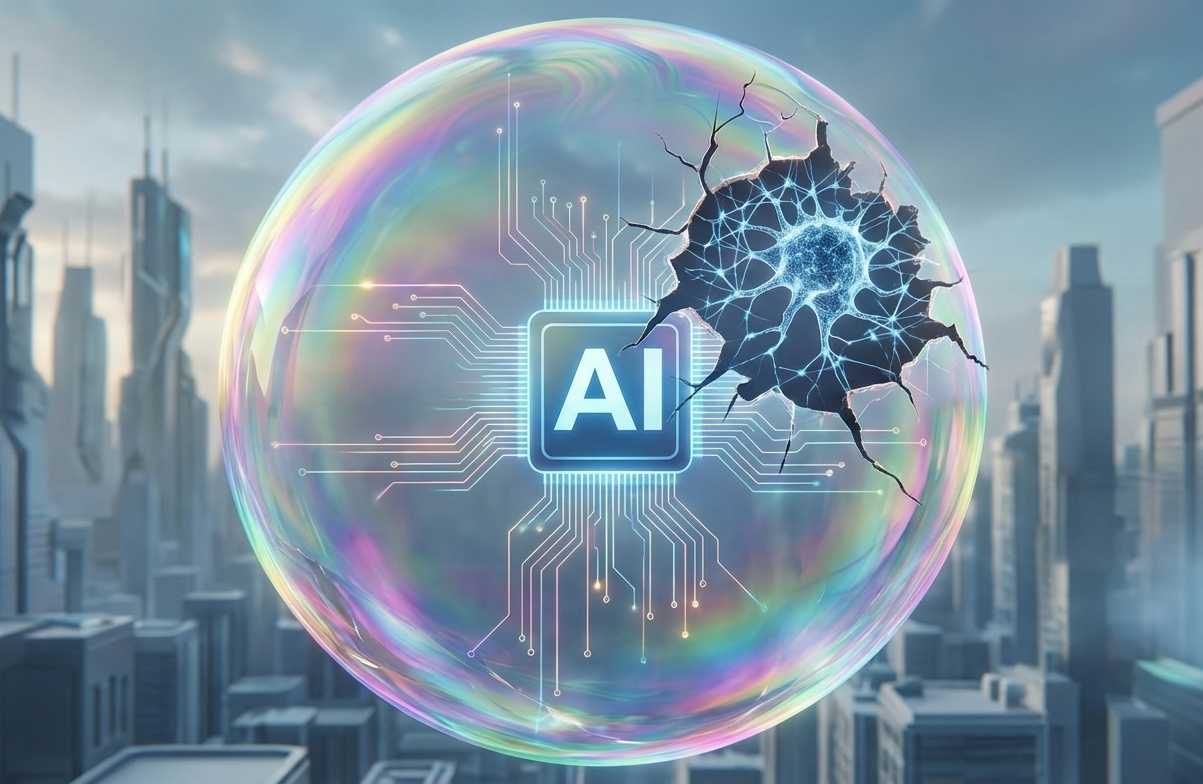
Del “wow” al negocio: el efecto de ChatGPT
El nuevo ciclo se aceleró con los grandes modelos de lenguaje como GPT-1, GPT-2 y GPT-3, y explotó cuando ChatGPT convirtió la IA generativa en producto de consumo masivo. En paralelo, los modelos de imagen consolidaron la sensación de “cambio de era” ya que la IA ya no solo clasifica o predice, también crea.
La carrera tecnológica: chips, energía y centros de datos
Detrás del entusiasmo hay una realidad física inevitable y es el poder de cómputo. Entrenar y desplegar modelos avanzados exige GPUs (Graphics processing unit), chips especializados, memoria RAM ultra rápida y centros de datos a gran escala. En 2025, el gasto global en centros de datos e infraestructura ligada a IA ya supera los 400.000 millones de dólares, con proyecciones muy agresivas para finales de la década.
Todo o nada
El auge no es solo tecnológico, también es financiero. A lo largo de estos años se ha visto una carrera de inversión donde las grandes tecnológicas destinan cantidades masivas a infraestructura, chips y talento, mientras el capital riesgo (Venture Capital) concentra gran parte de sus apuestas en startups de IA. Esa dinámica ha contribuido a una concentración bursátil enorme en un puñado de empresas vinculadas a la IA de forma desproporcionada. Esto explicaría en buena parte el gran rendimiento reciente del mercado y el crecimiento económico de EE.UU.
Señales inquietantes
En estos últimos años se han visto valoraciones gigantes con rentabilidad incierta, ha habido financiación circular y deuda, acuerdos cruzados entre grandes empresas del sector y estructuras que pueden amplificar riesgos si el ciclo se gira. Un ejemplo muy claro es la gigantesca inversión de NVIDIA en OpenIA, que al mismo tiempo se convirtió en dinero destinado a comprar chips de la propia empresa de NVIDIA. Esto genera una falsa sensación de demanda retroalimentada.
Otra señal preocupante es la concentración y el riesgo sistémico. El propio FMI advirtió que una corrección abrupta de valoraciones tecnológicas por resultados decepcionantes en IA podría cortar el boom y extender impactos macrofinancieros. Además, hoy en día encontramos paralelismos con la explosión del punto-com en la asignación de capital a ciegas a todo lo que lleva IA.
¿Es esto “otro 2008”?
Está claro que no es el mismo guion. En 2008 el núcleo fue la vivienda y el sistema bancario; aquí el foco es tecnológico. Pero el paralelismo aparece en tres puntos clave: opacidad, el apalancamiento de la deuda y el efecto contagio por interdependencia. En ese contexto, el Banco de Inglaterra ha señalado que el riesgo de una corrección brusca ha aumentado y que podría haber derrames hacia el sistema financiero.
La paradoja: la tecnología puede sobrevivir al “boom”
Incluso si hay burbuja, no implica que la IA sea humo. Si echamos la vista atrás podemos ver que otras burbujas tecnológicas dejaron un gran legado; la duda en la IA es si la infraestructura será tan reutilizable, porque el hardware se deprecia rápido y parte del despliegue puede quedar sobredimensionado.
En resumen, la IA está transformando la economía real, pero el mercado podría estar sobrepagando el futuro. La pregunta no es si la IA importa, sino si el precio actual del entusiasmo es sostenible cuando llegue la hora de demostrar retornos.
Introduction
Artificial intelligence (AI) has gone, in a matter of years, from a promising technological advancement to the epicenter of the market. Since the leap forward represented by GPT-1 in 2018 and its mass popularization with ChatGPT in 2022, generative AI has expanded into image and audio creation and business tools, while robotics and computer vision continue to mature. The result is an investment boom that is reshaping the technology sector… and is beginning to raise concerns.
From “wow” to business: the ChatGPT effect
The new cycle accelerated with major language models like GPT-1, GPT-2, and GPT-3, and exploded when ChatGPT turned generative AI into a mass-market product. In parallel, image models solidified the feeling of a “changing era,” as AI no longer just classifies or predicts, it also creates.
The technology race: chips, energy and data centers
Behind the enthusiasm lies an unavoidable physical reality: computing power. Training and deploying advanced models requires GPUs (Graphics Processing Units), specialized chips, ultra-fast RAM, and large-scale data centers. By 2025, global spending on data centers and AI-related infrastructure will already exceed $400 billion, with very aggressive projections for the end of the decade.
All in
The boom isn't just technological; it's also financial. Over the past few years, we've seen an investment race where major tech companies are pouring massive amounts into infrastructure, chips, and talent, while venture capital is concentrating a large portion of its bets on AI startups. This dynamic has contributed to a disproportionate concentration of stock market value in a handful of AI-related companies. This largely explains the market's recent strong performance and the US economic growth.
Disturbing signs
In recent years, we've seen massive valuations with uncertain returns, circular financing and debt, cross-company agreements between large companies in the sector, and structures that can amplify risks if the cycle reverses. A prime example is NVIDIA's enormous investment in OpenIA, which was simultaneously used to purchase chips from NVIDIA itself. This creates a false sense of self-sustaining demand.
Another worrying sign is the concentration and systemic risk. The IMF itself warned that an abrupt correction in technology valuations due to disappointing AI results could cut short the boom and extend macro-financial impacts. Furthermore, we are currently seeing parallels with the dot-com bubble in the indiscriminate allocation of capital to everything related to AI.
Is this “another 2008”?
It's clear that the script isn't the same. In 2008, the core issues were housing and the banking system; here, the focus is on technology. But the parallels appear in three key points: opacity, debt leverage, and the contagion effect of interdependence. In this context, the Bank of England has indicated that the risk of a sharp correction has increased and that there could be spillover effects on the financial system.
The paradox: technology can survive the “boom”
Even if there's a bubble, it doesn't mean AI is just smoke and mirrors. Looking back, we can see that other tech bubbles left a significant legacy; the question with AI is whether the infrastructure will be so reusable, because hardware depreciates quickly and some deployments may be over-engineered.
In short, AI is transforming the real economy, but the market may be overpaying for the future. The question isn't whether AI matters, but whether the current price of enthusiasm is sustainable when it comes time to demonstrate returns.